
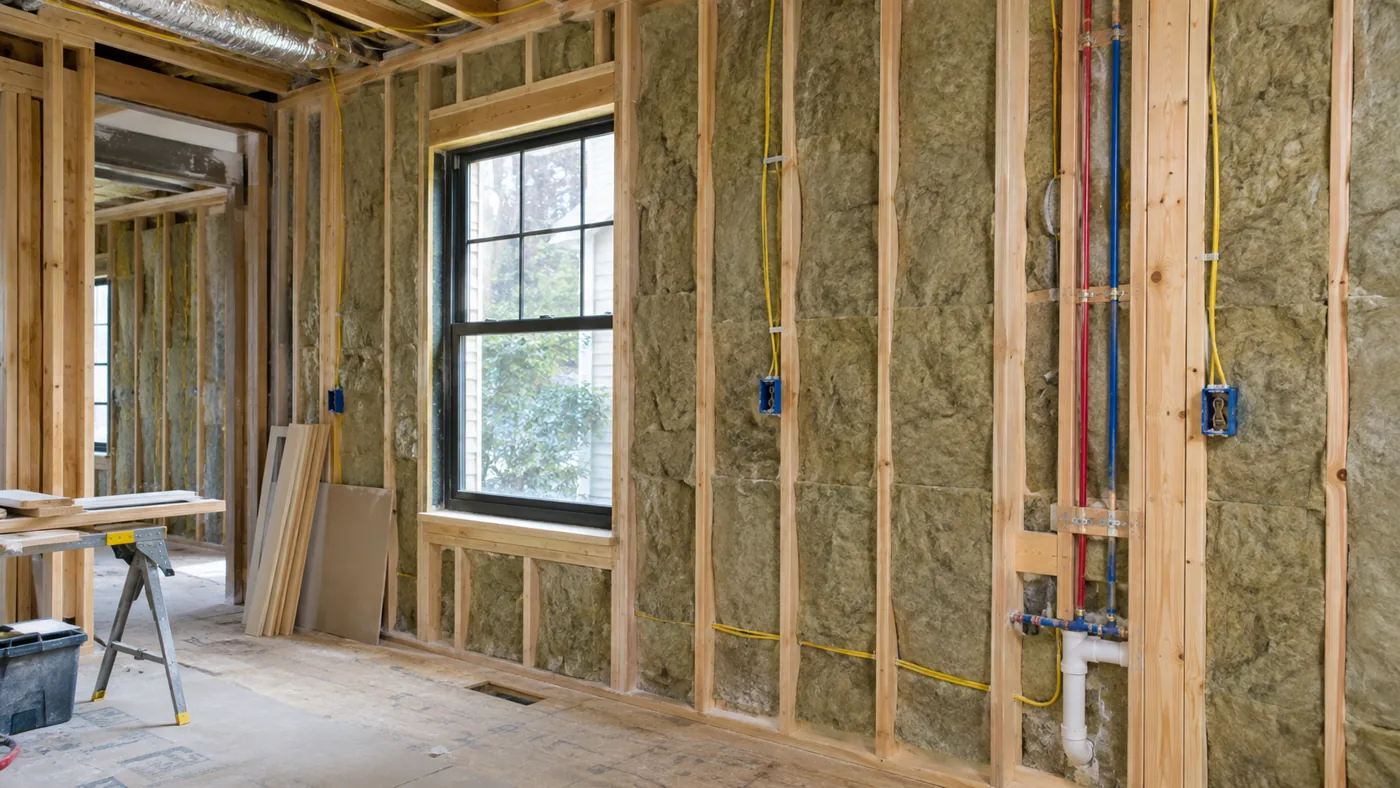
Repairing a damaged home can involve more than putting back what was there. The work may have to meet requirements that did not apply when the house was built. Ordinance or law coverage addresses certain additional costs created by enforcement of those requirements, subject to the policy.
A useful reconstruction plan keeps three questions separate: what was damaged, what the authorities require for the proposed work, and what the insurance contract covers. Neither a construction estimate nor an insurance limit answers all three.
Why codes belong in a rebuilding conversation
A home can be perfectly familiar to its owner while its systems and construction reflect several different eras. A kitchen addition, a replaced electrical panel, and an original foundation may have different histories. After damage, the scope of permitted work matters when determining which current requirements apply.
Do not assume every older home must be completely upgraded after any loss. Equally, do not assume that repairing only the visibly damaged portion avoids every code issue. Obtain a project-specific explanation from the building authority and qualified design or construction professionals.
The Maryland Insurance Administration's homeowner guide explains that ordinance or law coverage can address added rebuilding expense when covered damage leads to work that must comply with current codes. The existence, amount, and operation of that coverage must still be checked in the actual policy.
Separate ordinary replacement from required changes
For planning, begin with the physical work to repair or replace damaged property. Then identify additional work attributable to a written requirement. Finally, separate any improvements the owner chooses for comfort, appearance, efficiency, or convenience.
| Cost category | Illustrative question | Planning treatment |
|---|---|---|
| Ordinary repair | What does restoring the damaged assembly involve? | Describe materials, quantities, labor, and associated work. |
| Required code change | What additional work is required for approval? | Record the requirement and incremental scope separately. |
| Elective improvement | What change does the owner want beyond the required repair? | Keep it outside the assumed covered-loss budget. |
| Unresolved requirement | Has the authority actually decided what is necessary? | Carry a labeled uncertainty until clarified. |
This organization reduces double counting. If a contractor's base price already includes a required upgrade, adding the same allowance again inflates the estimate. Conversely, a low base price may omit engineering or related demolition necessary to perform the upgrade.
What a requirement might affect
Depending on the property, jurisdiction, and work, questions can arise around structural details, electrical systems, plumbing, energy performance, windows, roofing, or access and safety features. These are topics to investigate, not a statement that each one will apply to your home.
The Maryland post-disaster guide identifies several building systems that may need changes during rebuilding. A homeowner can use that list to prepare for a discussion, but a generic checklist cannot replace a permit review.
Ask the contractor to identify the affected assembly, the existing condition, the proposed compliant solution, and the work that distinguishes that solution from ordinary replacement. An item described only as code upgrades is difficult to evaluate or compare.
What to look for in your policy
Start with the declarations, then locate the ordinance or law provision and any endorsement modifying it. The declarations may display a limit without explaining all triggers, exclusions, or calculation rules.
Ask whether the stated amount is a percentage or a dollar limit, what amount a percentage applies to, whether the coverage is additional to another limit, and whether separate components share the same available amount. Avoid assuming that a percentage printed in one document describes every relevant expense.
Ask specifically how the policy treats increased construction cost, demolition expense, and work involving undamaged portions when an authority requires it. Coverage for one category should not be taken as confirmation of another. Also ask how the policy handles requirements or violations that existed before the loss.
Make the code allowance visible. Explore a rebuilding scenario with a separate, editable code-upgrade assumption, then ask a professional what is appropriate for the property.
Open the planning calculator Request an insurance reviewThe covered-loss question comes first
Ordinance or law coverage is not a general home-renovation account. The relevant policy may require a covered cause of loss and compliance with other conditions. A building official's requirement establishes something about the work; it does not independently establish insurance coverage.
Keep your questions precise. Ask which policy provision applies to the particular required work and whether the insurer needs further documentation. If a part of the claim is disputed, ask for a written explanation identifying the reason and policy language.
Different contracts and types of property can use different forms. A commercial building should not be evaluated by assuming that a residential endorsement operates the same way. Our commercial reconstruction resources begin with occupancy, building scope, and the questions needed for a separate review.
An example of separating the budget
Consider a hypothetical homeowner preparing to replace a damaged portion of a house. The contractor has priced ordinary restoration, but the permit review identifies additional structural work. The owner also decides this is a convenient time to redesign an unaffected bathroom.
The three amounts should remain distinct. The ordinary restoration needs a clear repair scope. The additional structural work needs an explanation of the requirement and its extra cost. The chosen bathroom renovation belongs in the owner's improvement budget unless a separate basis for coverage is established.
Suppose the contractor later revises the base repair proposal to include that structural work. The separate allowance must then be adjusted to prevent counting it twice. Tracking revisions by date is often more useful than repeatedly increasing one broad percentage.
Build a documentation trail
A short, organized record can help the contractor, building authority, and insurer discuss the same project. Save documents in their original form and keep a working index of what each document establishes.
| Document | What it helps establish | Check before relying on it |
|---|---|---|
| Written permit or code direction | The requirement identified by the authority. | Property, project scope, date, and issuing office. |
| Design or engineering scope | The proposed method of satisfying the requirement. | Whether it is preliminary, approved, or revised. |
| Itemized contractor proposal | The work and price assigned to the change. | Whether base and additional costs overlap. |
| Policy and endorsement | The applicable contract wording. | Effective dates and all amendments. |
| Written coverage response | The insurer's position on the submitted issue. | Outstanding information and next steps. |
When discussing an unresolved item, use the same label across documents. For example, distinguish a required connection detail from general framing replacement. Consistent labels help everyone see whether they are comparing identical work.
Manage changes without losing the original assumptions
A rebuilding budget often changes as a project becomes better defined. An initial inspection may identify an issue, a designer may propose a solution, and a permit review may clarify the required work. Each stage can improve the estimate, but only if the old assumptions are replaced deliberately.
Maintain a short revision table with the date, item changed, reason, and person providing the information. Note whether the change is a confirmed requirement, a proposed design, or an owner's preference. This keeps a tentative allowance from being mistaken for a settled fact.
For example, imagine an early budget includes a general structural allowance. A later engineering proposal identifies specific connection work and its supporting calculations. The budget should show whether that new scope replaces the general allowance or covers a separate issue. Leaving both untouched can overstate the total.
The reverse problem is also possible. A contractor may exclude permit-related design from a construction price, while the homeowner assumes it is included. Ask about services as well as materials: who prepares drawings, who coordinates inspection responses, and who prices any resulting change?
Where several contractors are quoting, give each the same written scope and identify known requirements. Invite them to list exclusions explicitly. A lower total is difficult to interpret when one proposal includes the required work and another assumes it will be handled separately.
Keep any insurance response tied to the version of the scope it considered. If the proposed work changes materially, ask whether the additional information affects the insurer's position. An answer about an early allowance may not resolve a later, better-documented requirement.
Before committing to an elective improvement, ask the contractor to price it separately from the required project. This creates a clearer record of the owner's decision and helps prevent an upgrade from obscuring the cost of necessary restoration.
These records also make future maintenance and renewal reviews easier. Once work is complete, retain the final scope and approvals rather than only the earliest proposal. The finished property, not the abandoned design, is what later estimates should describe.
What to review before a loss
At renewal, make sure the property description reflects known additions, major system changes, and significant remodeling. An old date of construction alone does not describe the entire house. Provide accurate information rather than guessing the condition of concealed components.
- Locate any existing ordinance or law endorsement.
- Ask what limit applies and how it relates to dwelling coverage.
- Identify unusually old or specialized construction features.
- Keep records of permitted additions and completed upgrades.
- Ask how required work on undamaged portions is treated.
- Discuss whether the selected coverage fits the property's known characteristics.
There is no universal percentage that this website can recommend for every home. The appropriate discussion depends on construction, possible code exposure, available forms, limits, and the homeowner's circumstances. A larger number without an understanding of the covered scope can still leave unanswered questions.
Historic homes need another layer of review
Historic designation, an easement, a review district, or conditions attached to previous incentives may affect proposed work. Do not assume those requirements are identical to ordinary building codes or that one insurance endorsement necessarily addresses every preservation-related cost.
Ask the relevant preservation office what approvals apply to the specific property. Obtain a separate explanation from the insurer about the treatment of required materials, specialist workmanship, and other restoration expenses.
Our historic-home rebuilding guide provides a documentation approach for distinctive features. It is especially useful when the character of a home depends on materials and details that a standard description such as premium finishes fails to capture.
Using a code assumption in this calculator
The planning calculator lets you make a code-upgrade assumption explicit. It does not inspect the property, interpret adopted codes, or determine that a particular improvement will be required or covered.
A zero assumption does not mean the home has no code exposure. A nonzero assumption does not establish the likely cost. The point is to show how a chosen allowance changes a scenario while you obtain better information.
Use the methodology page to understand where the allowance enters the calculation and which other percentages follow it. If a professional estimate already includes code work, avoid adding it again. Record the date and scope of any external estimate used to replace an illustrative assumption.
Questions homeowners commonly ask
Does replacement cost automatically include every required upgrade?
Do not assume so. Replacement-cost valuation and ordinance or law provisions answer different questions. Read the relevant wording together and ask the insurer to explain any limit or exclusion affecting required changes.
Does the age of my house determine the allowance?
No single age-based rule can establish the required work. Remodeling history, current condition, the area damaged, and the proposed repair can all change the questions that need to be answered.
Can my contractor decide what insurance must pay?
A contractor can document and price construction work. Coverage depends on the insurance contract and applicable rules. Keep the construction determination and the coverage determination connected through documentation, but do not treat them as interchangeable.
Should I delay urgent protective work while sorting this out?
Follow the applicable emergency guidance and your insurer's instructions about protecting the property, while avoiding unsafe entry or work beyond your capabilities. Document conditions when safe, retain receipts, and seek qualified assistance. This planning guide does not replace incident-specific safety directions.
Turn an uncertain allowance into clear questions
The best result of a preliminary estimate is often a better question. Ask what work is required, who has confirmed it, where its cost appears, and which policy provision may respond. That approach produces a more useful rebuilding plan than assuming a standard percentage will cover every possibility.
Build a clearer scenario. Separate ordinary reconstruction, code assumptions, and other allowances before comparing the result with your coverage.
Start a planning estimate Ask for a coverage reviewSources and further reading
- Maryland Insurance Administration: Homeowner insurance guide
- Maryland Insurance Administration: Post-disaster claims guide
- National Park Service: Standards for the treatment of historic properties
Source links support the concepts discussed; they do not validate this site’s illustrative calculator rates.